

In exploring thinking and the nature of suffering, this work by Joseph Nguyen offers a compelling examination of how the mind’s patterns create our experience of pain and distress. The book shines a light on the direct link between thought processes and emotional suffering, reminding readers that much of what troubles us stems from the interpretations we hold. This makes the content both relevant and transformative for anyone looking to shift their inner narrative.
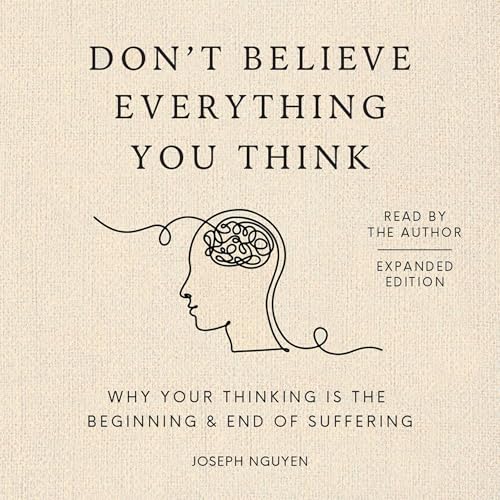
Don’t Believe Everything You Think (Expanded Edition): Why Y
by Joseph Nguyen
- Comprehensive coverage of non-fiction topics
- Practical insights with real-world applications
- Well-researched content with actionable takeaways
View Details & Price on Amazon
As an Amazon Associate I earn from qualifying purchases.
Essential Framework Overview
- Core premise: Suffering is born from the mind s habitual thoughts, especially beliefs that go unchallenged.
- Expanded Edition: Includes additional reflections and exercises aimed at deepening awareness of how thinking patterns sustain suffering.
- Thinking as a cycle: Nguyen presents thinking not just as a passive activity but as an active creator of emotional states, which can either trap or free the individual.
- Mindfulness integration: The text encourages observing thoughts without attachment, a method borrowed from mindfulness practices but tailored to everyday cognition.
- Practical exercises: Step-by-step guidance to notice, question, and dismantle harmful thought loops.
- Emphasis on self-compassion: Readers are taught to approach their inner dialogue gently, avoiding judgment while fostering change.
- Psychological insight: Draws on cognitive-behavioral concepts but with a philosophical touch that broadens the conversation beyond therapy.
- Unique contribution: Positions thinking itself as the origin and potential resolution of suffering, rather than external circumstances.
Real-World Case Studies
- A middle-aged professional feeling trapped by anxiety learns to identify self-critical thoughts as the source of their distress, applying the book’s techniques to interrupt the cycle.
- A young adult struggling with social rejection uses Nguyen s mindfulness-based suggestions to separate the event from the internal story, reducing emotional pain.
- A caregiver prone to burnout discovers the value in recognizing automatic negative evaluations and gradually shifts to a more balanced internal narrative.
- Incorporation in therapy settings where cognitive restructuring is common, but Nguyen s approach adds nuance by focusing on the meta-cognition of believing thoughts rather than just changing them.
- Readers report increased emotional resilience through consistent practice of patience and observation of thoughts, highlighting the book’s accessibility beyond academic contexts.
Critical Evaluation
- The expanded edition adds valuable material, but some readers may find the pacing uneven due to the added reflections.
- The conceptual link between thought and suffering is powerful but occasionally repeats similar ideas without new angles.
- Nguyen s style balances clarity with depth, though a few sections may challenge those unfamiliar with mindfulness or cognitive psychology.
- Practical exercises are a strong point but could benefit from more varied examples to appeal across different cultures and life experiences.
- Compared to classics like Eckhart Tolle s “The Power of Now,” this book offers a more structured emphasis on thought patterns specifically rather than general presence.
- Strength lies in its application-focused guidance that encourages immediate real-world changes rather than abstract theory.
- Some readers might desire more scientific references to back up the psychological claims, which are mostly implied rather than cited.
Market Position Analysis
| Aspect | Don’t Believe Everything You Think | The Power of Now (Eckhart Tolle) | Feeling Good (David D. Burns) |
|---|---|---|---|
| Focus Area | Thinking patterns & suffering | Present moment awareness | Cognitive distortions & mood |
| Approach | Mindfulness + cognitive insight | Spiritual awakening & presence | Psychotherapy techniques (CBT) |
| Practicality | Exercises for thought observation | Guided meditations & reflections | Worksheets & mood tracking |
| Reader Accessibility | Moderate some background helpful | Easy broadly philosophical | Moderate clinical tone |
| Market Appeal | Self-help, mindfulness, psychology | Spiritual, new age readers | Cognitive therapy seekers |
Strategic Recommendations
- Develop supplementary materials such as guided audio exercises or video breakdowns to broaden accessibility for diverse learning preferences.
- Consider partnerships with mental health professionals to integrate the book’s approach into coaching or therapy frameworks.
- Expand on scientific validation by referencing recent studies on thought patterns and emotional regulation to enhance credibility.
- Introduce community forums or social media groups for readers to share experiences and support the application of the techniques.
- Explore shorter, targeted workbooks focusing on specific suffering types (e.g., anxiety, grief) using the book’s core framework.