

The study of The Revolutionary Decade Of Impressionism reveals how a tumultuous ten-year span redefined artistic expression and cultural reception. This period, analyzed in Ross King’s historical account, sheds light on the convergence of innovation, resistance, and ultimate acceptance that shaped modern art. these foundational shifts is crucial for appreciating Impressionism’s lasting impact on both art history and contemporary creative practices.
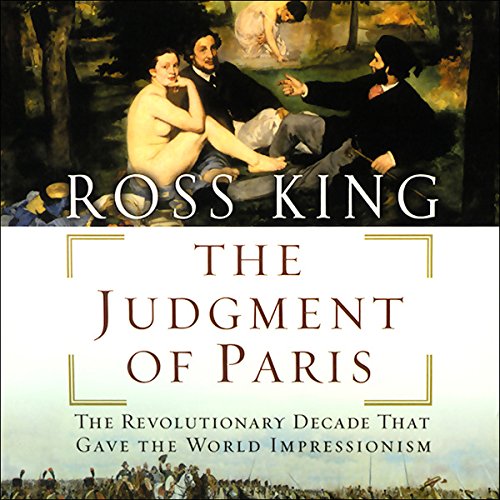
The Judgment of Paris: The Revolutionary Decade that Gave th
by Ross King
- Comprehensive coverage of non-fiction topics
- Practical insights with real-world applications
- Well-researched content with actionable takeaways
View Details & Price on Amazon
As an Amazon Associate I earn from qualifying purchases.
Essential Framework Overview
- Ross King structures the narrative chronologically, emphasizing the years 1863 to 1874, the decade when Impressionism emerged from controversy to acclaim.
- The book highlights the role of key figures such as Claude Monet, douard Manet, Edgar Degas, and Pierre-Auguste Renoir, detailing their contributions and personal struggles.
- A central theme is the conflict between the conservative art establishment, represented by the Paris Salon, and the avant-garde artists pushing new boundaries.
- King explores the influence of sociopolitical events, including the Franco-Prussian War and the Paris Commune, as backdrop forces shaping the artists environment.
- The work carefully balances artistic techniques with the business of art, such as how exhibitions, critics, and dealers affected the artists’ careers.
- Through detailed description of pivotal exhibitions, the book demonstrates how the public’s perception evolved from rejection to enthusiasm over this decade.
- Visual experimentation and the break from traditional realism are underlined as vital aspects of the Impressionist revolution.
- The inclusion of personal letters and contemporary reviews provides authentic insight into the artists’ motivations and contemporary reception.
Real-World Case Studies
- Monet’s early works, such as “Impression, Sunrise,” serve as a case study for innovation in brushwork and light representation, illustrating the foundation for Impressionism’s signature style.
- The Salon des Refus s exhibition of 1863 is examined as a critical turning point when rejected artists gained alternative platforms, altering the art world s structure.
- Degas’ focus on modern urban life and movement contrasts with Monet and Renoir’s landscapes, showcasing the stylistic diversity within the movement.
- Manet s controversial paintings, particularly “Le D jeuner sur l herbe,” demonstrate the tension between tradition and modernity in subject matter and technique.
- The commercial strategies of art dealers like Paul Durand-Ruel are analyzed, showing how market support enabled the survival and growth of Impressionism.
- King uses the collective efforts behind organizing independent exhibitions in 1874 to highlight strategic collaboration among the artists.
Critical Evaluation
- Strengths:
- Comprehensive historical context that situates Impressionism within broader cultural and political developments.
- Well-researched, drawing upon primary sources including artist correspondence and contemporary criticism.
- Clear explanation of artistic techniques accessible to both scholars and general readers.
- Balanced portrayal of key personalities without idealizing or vilifying any individual.
- Weaknesses:
- Occasional focus on Parisian-centric narratives, with less attention to Impressionism s international influence during the decade.
- Limited visual analyses for some lesser-known artists, potentially overlooking their contributions.
- Could benefit from comparative exploration alongside other art movements of the era, such as Realism or Symbolism.
- The book’s depth sometimes challenges readers unfamiliar with 19th-century French history, necessitating additional background reading.
Market Position Analysis
| Aspect | The Judgment of Paris | Alternative: Impressionism: Art, Leisure, and Parisian Society (Robert L. Herbert) | Alternative: The Private Lives of the Impressionists (Sue Roe) |
|---|---|---|---|
| Focus | Revolutionary decade that defined Impressionism s emergence | Social and cultural context of Impressionism in Paris | Biographical narratives of individual artists |
| Writing Style | Engaging but scholarly, blending narrative and analysis | Academic, detailed with emphasis on historical setting | Accessible, focusing on personal stories and drama |
| Depth of Artistic Technique | Moderate; explained with clarity but not overly technical | High; includes detailed art historical analysis | Low; more focused on life events than technique |
| Usefulness for Practical Application | Strong for those studying cultural change and art history evolution | Best for societal influences on art | Ideal for readers interested in artist psychology and biography |
| Market Niche | General readers and students seeking a balanced overview | Academics and specialists in art history | Casual readers and fans of art biographies |
Strategic Recommendations
- Readers aiming to understand the intersection of culture and artistic innovation should prioritize this book for its decade-focused narrative and rich context.
- Art educators could integrate the book’s timeline approach to frame lessons on Impressionism s formative years effectively.
- To deepen visual arts technique knowledge, pairing this work with Robert L. Herbert s text is advisable, balancing historical with technical insight.
- Those interested in artist personalities may supplement with Sue Roe s biographies to gain emotional and psychological perspectives.
- For practical application beyond art history, consider how resistance to new ideas presented in this decade relates to innovation adoption in other fields.
- Business professionals studying market disruption can extract lessons from the Impressionists use of alternative exhibitions and dealer networks, applying these strategies to modern creative industries.