

The Geography of the Imagination offers a compelling investigation into the role of imagination and exploration in creative thinking. Guy Davenport s collection of essays challenges readers to consider how the mind maps ideas and experiences, drawing from history, literature, and art to fuel intellectual and artistic innovation. This work stands out by blending erudition with practical insights, making it both a theoretical and applicable resource for creative professionals and thinkers alike.
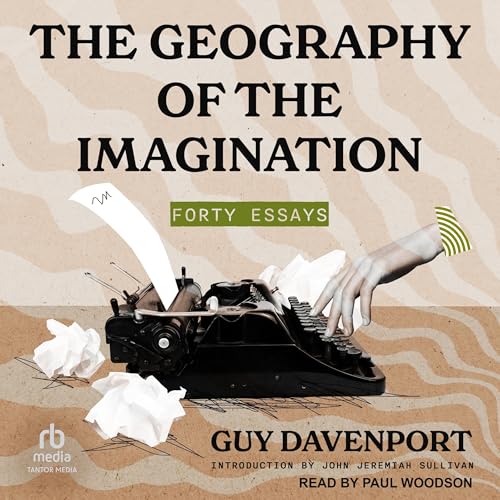
The Geography of the Imagination: Forty Essays
by Guy Davenport
- Comprehensive coverage of non-fiction topics
- Practical insights with real-world applications
- Well-researched content with actionable takeaways
As an Amazon Associate I earn from qualifying purchases.
Fundamental Themes Explored
- Interconnection of Imagination and Geography: Davenport treats imagination as a kind of mental geography, where cultural, historical, and literary landscapes converge to shape creative output.
- Exploration as a Creative Act: The essays emphasize exploration beyond physical travel, focusing on intellectual and artistic journeys that redefine boundaries.
- Integration of Multiple Disciplines: The text draws from diverse fields classical literature, mythology, modern art to demonstrate how lateral thinking enriches creativity.
- Temporal and Spatial Layers: Davenport considers how past and present narratives coexist in the mind s geography, influencing contemporary thought and creation.
- Imagination as a Dynamic Process: Imagination is not static but an evolving dialogue among texts, images, and experiences, encouraging continual reinterpretation.
- The Role of the Reader/Viewer: Active engagement with ideas is necessary; the reader s participation completes the imaginative act Davenport describes.
- Mapping Creativity: The metaphor of geography suggests a structured yet flexible framework for how ideas develop and interact.
Methodology and Approach
Davenport s approach is essayistic and highly intertextual, weaving references with personal reflection. Each essay functions as a discrete exploration yet contributes to a larger mosaic of thought.
The text employs:
- Close reading of literary and artistic works, combining analytical rigor with poetic sensibility.
- Comparative analysis across cultures and epochs, highlighting universal patterns in imagination.
- Philosophical inquiry into the nature of creativity and perception.
- Use of metaphor, especially geographical and cartographical, to model abstract mental processes.
- Non-linear narrative structures that mirror the associative nature of imaginative thinking.
This method encourages readers to think beyond traditional academic boundaries, fostering a more fluid and integrated .
Strengths and Limitations
- Strengths:
- Rich interdisciplinary perspective appeals to scholars and creatives alike.
- Thought-provoking prose that challenges conventional modes of analysis and inspires new approaches.
- Practical implications for creative practitioners seeking to harness imagination strategically.
- Elegant synthesis of dense intellectual material without sacrificing readability.
- Encourages active reader engagement, making the work interactive rather than didactic.
- Limitations:
- At times the dense allusions and references may overwhelm readers unfamiliar with classical or obscure sources.
- The essay format can feel fragmented, potentially hindering a continuous narrative flow for some.
- Less focus on explicit, step-by-step practical applications compared to more instructional non-fiction.
- May require multiple readings to fully appreciate the depth and nuance, limiting accessibility.
Competitive Landscape
| Aspect | The Geography of the Imagination | Comparison Book 1: “On Writing” by Stephen King | Comparison Book 2: “The Creative Habit” by Twyla Tharp |
|---|---|---|---|
| Focus | Explores imagination through essays blending art, history, and literature | Memoir and practical advice on writing craft | Structured routines and exercises for creative discipline |
| Style | Philosophical, poetic, and dense | Conversational and narrative-driven | Pragmatic and motivational |
| Audience | Intellectual readers and creatives seeking depth | Aspiring writers and storytellers | Artists and performers wanting practical guidance |
| Practical Application | More conceptual with implied strategies | Direct advice and writing exercises | Explicit techniques and habit-building |
Final Assessment and Verdict
- The Geography of the Imagination serves as a thought-provoking resource for those interested in the intersection of creativity, culture, and intellectual inquiry.
- Its essay format and rich allusions make it better suited for readers willing to invest in complex ideas rather than those seeking straightforward how-to guides.
- The book’s value lies in inspiring creative exploration through a unique conceptual framework centered on mental mapping and cultural synthesis.
- While less direct in offering practical steps, its insights encourage readers to develop personalized strategies for imagination and creative thinking.
- Recommended for fans of intellectual essay collections and those drawn to interdisciplinary creative studies, akin to works by Susan Sontag or Italo Calvino.
For readers interested in complementing Davenport s approach with more applied methodologies, Stephen King s “On Writing” or Twyla Tharp s “The Creative Habit” provide useful, practice-oriented perspectives.